Portion Practice
The Geometry of the Plate: Portion Awareness Without Measuring Cups
Tobias Marsden·
·11 min read
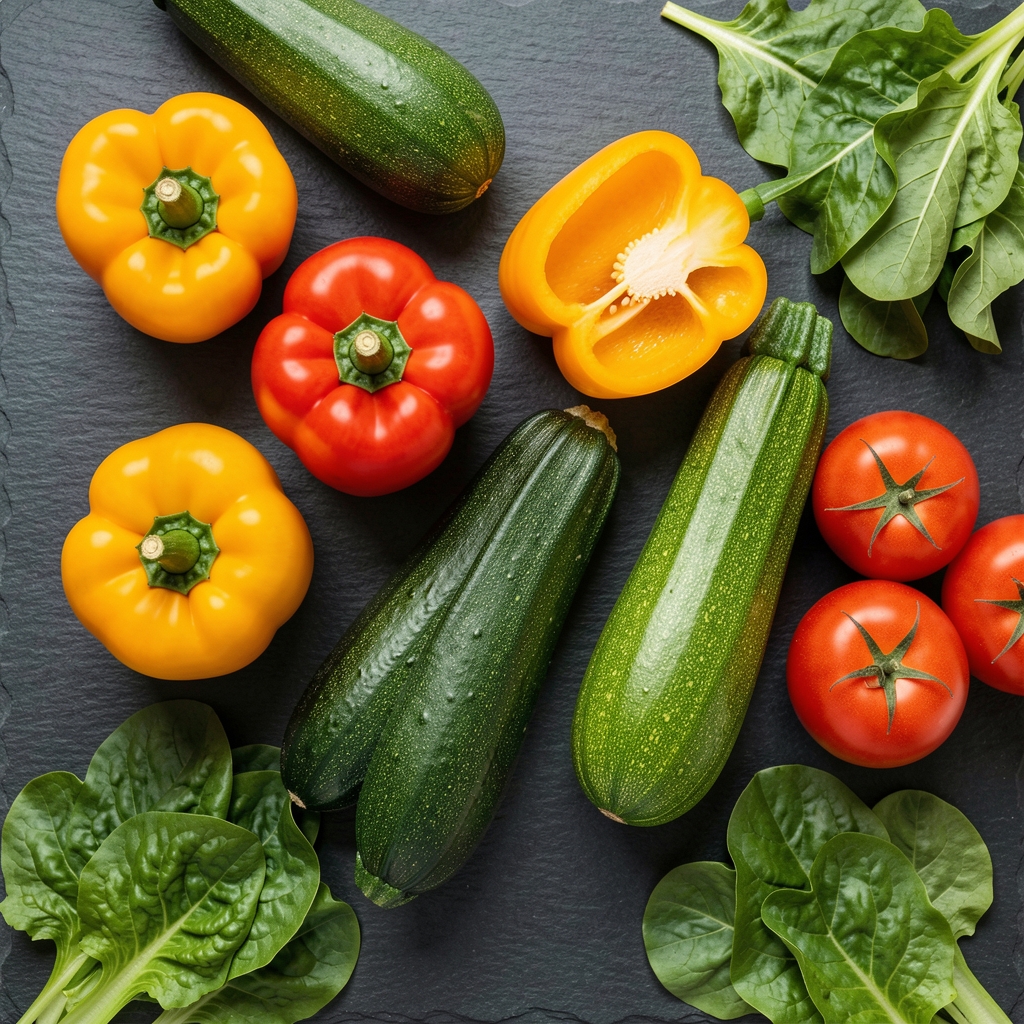
The old adage of eating the rainbow holds a quieter significance than its repetition might suggest. Pigment diversity in fresh produce correlates with the breadth of phytonutrient variety available to the body — a weekly shopping list structured around colour is, in effect, a practical proxy for nutritional range without requiring the reader to commit a nutrient database to memory.
Colour in vegetables and fruits is not incidental — it is, in most cases, a visible indicator of the plant's phytochemical composition. The deep green of kale and spinach signals chlorophyll and carotenoid concentration. The red of tomatoes and red peppers reflects lycopene and anthocyanin content. The orange of sweet potato and carrot indicates beta-carotene presence in meaningful quantities.
This correspondence is not universal — white and cream-coloured vegetables (cauliflower, garlic, onion) contain significant compounds (allicin, quercetin, glucosinolates) that their muted palette does not announce. The colour shorthand is imperfect, but it is good enough: a shopping basket that represents eight or more distinct colour bands will very likely represent a broader phytonutrient range than one dominated by two or three shades.
The practical value of this approach is that it requires no specialist knowledge at the point of purchase. A shopper walking through a weekend market, selecting one item from each colour family present, is making nutritionally diverse choices without the apparatus of a food diary or calorie tracking.
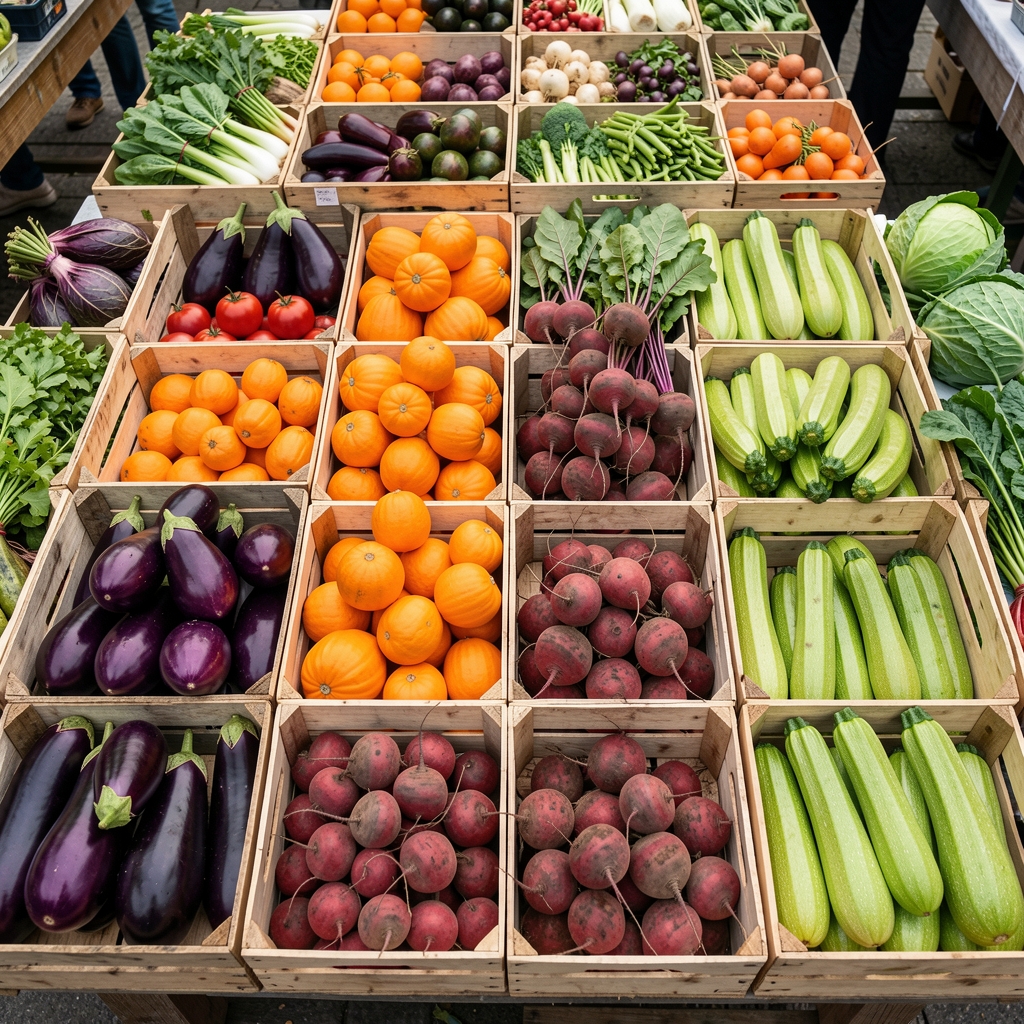
Seasonal variation at a London market. Colour diversity shifts considerably between winter and summer — the planning discipline accommodates both seasons differently.
A practical implementation of colour-led selection involves identifying six to eight colour bands at the start of the week and assigning one or two produce items to each. In practice, the list might read: dark green (spinach, cavolo nero), bright green (broccoli, courgette), red (tomatoes, red peppers), orange (sweet potato, carrot), purple (red cabbage, aubergine), white (cauliflower, fennel), and yellow (yellow pepper, corn when in season).
This structure does not dictate recipes. It establishes a raw material palette from which the week's meals are constructed. The constraint is productive: selecting from an already-purchased palette of varied produce naturally encourages preparation methods — roasting, steaming, raw salads, soups — that retain compound integrity better than repeated high-temperature frying of the same two or three vegetables.
The seasonal dimension of this method should not be underemphasised. The colour range available at a good market in February differs substantially from that of August. Winter lists lean toward dark leafy greens, root vegetables (orange, purple, white), and brassicas. Summer allows for the fuller spectrum — soft berries, a wider tomato range, courgettes, and fresh herbs in abundance. Neither season is nutritionally deficient; they are compositionally different.
"A shopping basket representing eight colour bands will very likely represent a broader phytonutrient range than one dominated by two or three shades."
— From this article
A useful secondary principle within colour-led selection is rotation: not repeating the same items from the same colour band across consecutive weeks. The green slot filled by spinach this week might be filled by watercress, pak choi, or savoy cabbage next week. Rotation diversifies the specific compound profile within each colour band over the course of a month.
Frequency within the week also matters. Distributing coloured produce across five to six meals rather than concentrating it in two or three larger portions tends to provide more consistent availability of the compounds present — a practical consideration that aligns with what published dietary frameworks describe as optimal intake patterns for plant-based compounds.
This does not necessitate elaborate meal planning. A salad at lunch and a roasted vegetable accompaniment at dinner, varied across the week's purchased palette, is sufficient framework for most households. The method scales comfortably from a single person cooking for themselves to a family with varied preferences.
The colour-led approach is not a strict protocol. It is a framework that accommodates budget, availability, and preference. In weeks when certain colour bands are expensive, poorly represented at the available market, or simply absent from the regular supplier, the shopper is not obligated to seek a substitute. A week with five colour bands represented is meaningfully more diverse than a week with two; perfect is not the baseline.
Frozen vegetables occupy an underacknowledged position in colour-led planning. Frozen peas, broad beans, and spinach — frozen rapidly after harvest — retain their compound profiles reliably. Frozen berries similarly retain anthocyanin content well. For the winter weeks when fresh availability narrows and budget constrains, frozen produce fills the colour spectrum without compromise.
The overall aim of this approach is not to construct a perfectly optimised diet on paper. It is to make a slightly better purchase decision, reproducibly, week after week — which is, in practice, how dietary patterns actually shift. Not through a single dramatic re-composition, but through the quiet accumulation of more considered small choices.

Eleanor Whitfield leads editorial coverage of seasonal produce and meal composition at Tardole Almanac. Her writing draws on food journalism and published nutritional research, with a sustained interest in the lived practice of everyday eating.
More from this author